

Blog
Click HERE for a complete alphabetical list of posts.
The Calling of God’s Ministers
Listening to a daily bible-teaching program this week I heard the speaker quote this verse: "For you see your calling, brethren, that not many wise according to the flesh, not many mighty, not many noble, are called" (I Corinthians 1:26 NKJV). Oh, how true is [...]
Give Them the Bible
Here is a word of counsel for young men who have their eye on the ministry. If you take my advice, you will not make your sermons from random texts, but will preach straight through a book of the Bible. I believe that what this [...]
Covid19 vs Psalm 91
At the time of writing, the World Health Organization has declared a pandemic, a worldwide epidemic that mankind has difficulty in controlling. Thus far, 118 countries have diagnosed people with the Corona-virus COVID-19. It originated in China, and the government there has quarantined large areas [...]
A Glimpse of Heaven
It is believed that John was a very old man when he penned the Revelation of Jesus Christ. We know from this book that he had been banished into exile upon a little island in the Aegean Sea called the Isle of Patmos. And because [...]
50th Anniversary interview
Newsletter Interviewer: So, Peter, tell us why today is such a special day for you and all those who are still active in this ministry. Peter Wade: Well, on August 20th 1969, fifty years ago, the incorporation of Positive Word Ministries was officially finalized with [...]
Dust off your Bible!
Brush the dust off your Bible. Half the sorrows of the world come about because people don't read their Bible. They simply don't know and can't understand the great truths it contains. Everyone likes to hear a secret, and the divine confidences and revelations are [...]
The Sparrows and God
"Are not five sparrows sold for two pennies? And not one of them is forgotten before God. Why, even the hairs of your head are all numbered. Fear not; you are of more value than many sparrows" (Luke 12:6-7 ESV; see also Matthew 10:29-31). "Look [...]
My Top 50 Favorite Verses (4)
"His divine power has granted to us all things that pertain to life and godliness, through the knowledge of him who called us to his own glory and excellence, by which he has granted to us his precious and very great promises, so that through [...]
Believer: God Cares For You
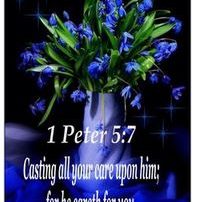
Many times over many decades I've been lifted in a challenging time by just one verse of scripture. And I'm not alone, as an internet search will quickly reveal. Here's the verse I'm talking about, and its not even a complete sentence: "Casting all your [...]
My Top 50 Favorite Verses (3)
"Who has rescued us out from the power of darkness and has transported us into the kingdom of his beloved Son" (Colossians 1:13). Thank you, Father! "God rescued us from dead-end alleys and dark dungeons. He's set us up in the kingdom of the Son [...]